– July 2026 –
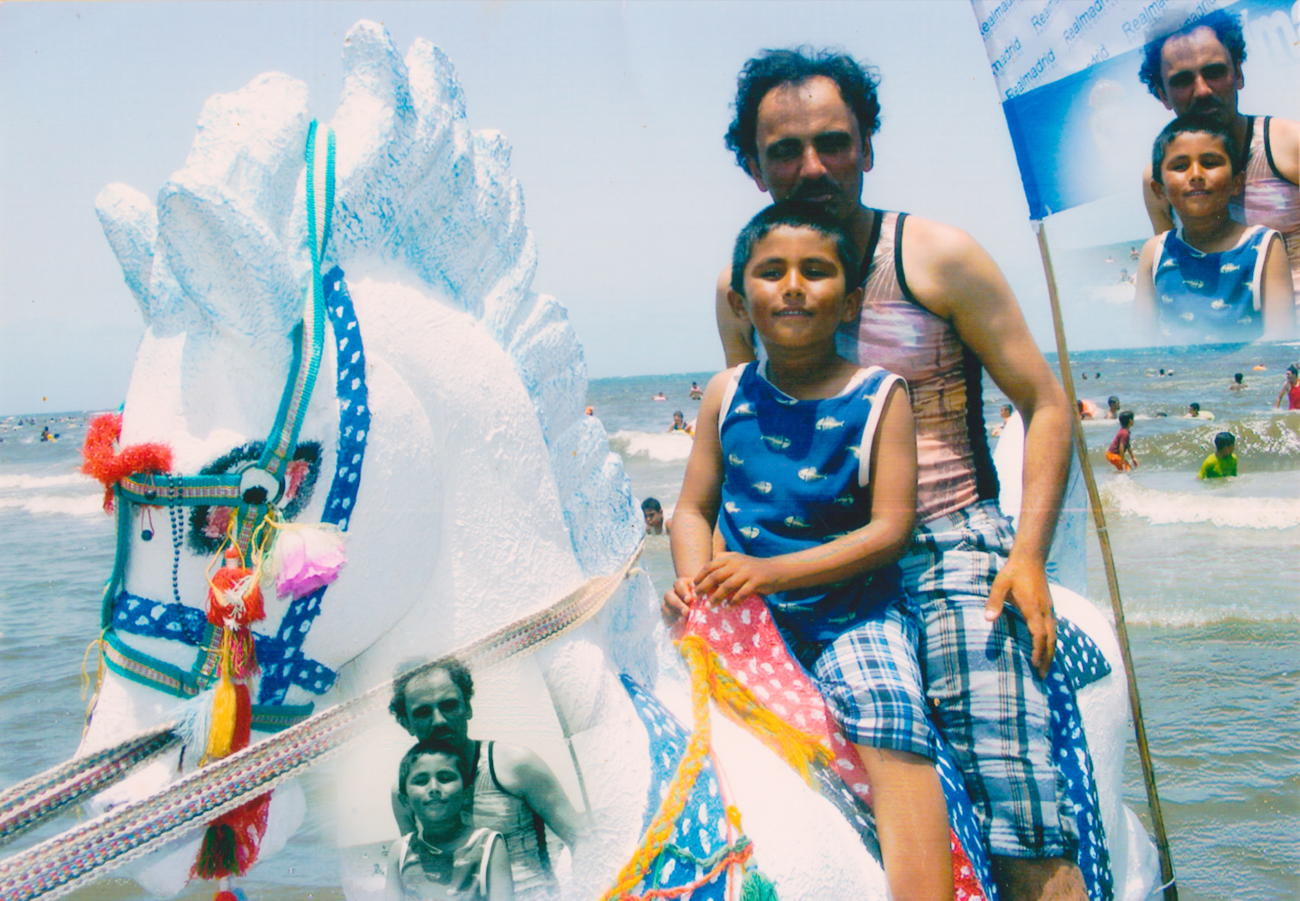
 Afef Omri – Mehdi Guermazi / Tunísia @_afefomri
AUDIOCLOPEDIA
Afef Omri and Mehdi Guermazi are a Tunisian artist duo made up of a visual artist, architect, and researcher, and a musician, sound producer, and web developer. Their collaborative practice combines field research, sound recording, photography, mapping, and digital tools to explore the relationships between oral traditions, collective memory, and place.
During the residency, they are developing AUDIOCLOPEDIA, a project that explores the traditional songs of southern Tunisia and their connection to local landscapes and ways of life. Drawing on field recordings, family archives, and an interactive sound-mapping platform, the project documents oral practices that are now at risk of disappearing.
Each recording is linked to a specific location, creating a sonic map that connects memory, territory, and everyday experience. Alongside this, the use of archival photographs expands the research into how memory and cultural heritage are preserved and transmitted in southern Tunisia.
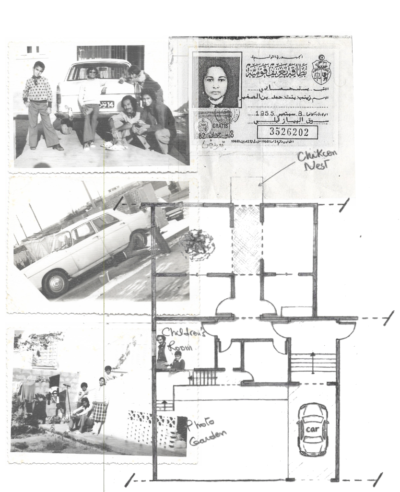
 Ali Zaraay / Egipte – @alizaray
CRAWLING ON THE DUST
Ali Zaraay is an Egyptian documentary photographer based in Cairo. He studied documentary photography and photojournalism at Hochschule Hannover in Germany and develops long-term projects exploring landscapes in transition, memory, and marginalized communities. His work combines photography, vernacular archives, and documentary research, and has been featured in programs such as the World Press Photo Joop Swart Masterclass and the Cité des Arts residency in Paris.
During the residency, he is developing Crawling on the Dust, a long-term project that began nearly ten years ago with Haj Hani and his family, a nomadic Bedouin community living in Egypt’s Nile Delta. Through photographs and family archives gathered over the years, the project documents how rapid urban expansion is reshaping their way of life while the memory of the land continues to redefine ideas of space, movement, and home. It also explores the close relationship between nomadic communities and their animals, questioning the boundaries between care, survival, and coexistence. Following several generations of the same family—including the journey of Haj Hani’s son, Selim, who eventually reached Italy after a long migration route—the project contrasts different ways of inhabiting the world and imagining the future. In doing so, it challenges colonial understandings of territory, borders, and mobility, reconstructing the historical paths of a community that has lived across these landscapes for centuries while reflecting on the inequalities that shape the different shores of the Mediterranean.
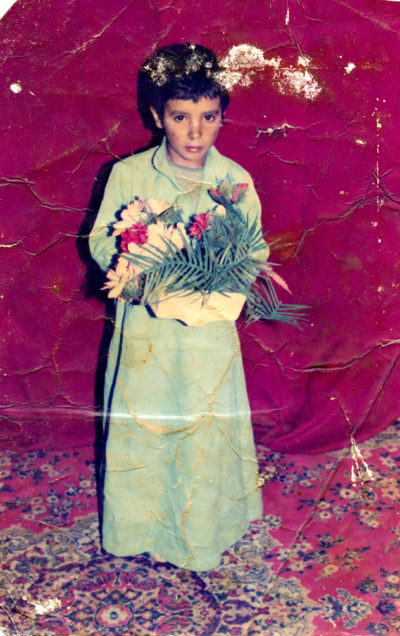
 Andrés and Francisca Khamis Giacoman / Xile / Palestina @andreskhamis @franciscakhamis
POISON PIXEL
Andrés and Francisca Khamis Giacoman are siblings born into the Palestinian diaspora in Chile. Their work explores questions of identity, memory, and belonging within this community, addressing the complexities of the Palestinian experience in the Chilean context. Their creative practice is grounded in collaborative filmmaking and research-based processes. Their films and video installations have been exhibited internationally at venues and festivals, including the Locarno Film Festival, Cairo International Film Festival, the Kochi-Muziris Biennale 2025–26 and Dar Yusuf Nasri Jacir for Art and Research.
In their ongoing research project Voy y vuelvo, Andrés and Francisca investigate the relationship between Palestine and Chile through the history of the textile industry.
Moving between Palestine and Chile, Voy y vuelvo travels across different times and territories, weaving together stories of migration and textile labour.
Through archival materials, observation, and fiction, the project reconstructs a fragmented memory in which the past continues to return.
During the residency, Andrés and Francisca will focus on the archive, particularly on letters exchanged between Palestine and Chile. They will explore ways of activating these letters, reconsidering their forms, meanings, and possibilities.
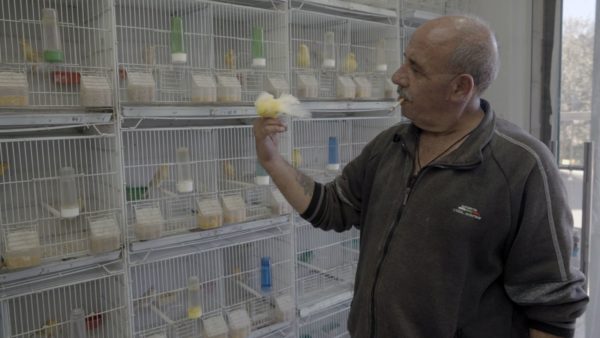
 Anouch Basbous / França / Líban @anouch__basbous
KHIYAL AL SAKHRA
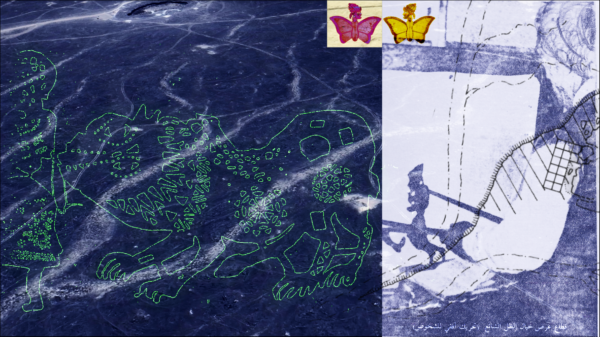
Anouch Basbous is a French-Lebanese visual artist and filmmaker who graduated from the Marseille School of Fine Arts in 2025. Working between Marseille and Lebanon, her practice combines filmmaking, visual research, and editing to explore the intersections of imagination, memory, and contemporary violence. She is currently developing a new film project with the support of the BAAB (Beyond Audiovisual and Anthropological Boundaries) residency.
During the residency, she is developing Khiyāl al-Ṣakhra (The Shadow, or the Imagination of the Stone), a visual research project centered on the striped hyena—an animal surrounded by myths and superstitions across the SWANA region. Drawing on archives, oral traditions, scientific texts, found images, and footage filmed in Lebanon, the project explores how the figure of the hyena challenges the boundaries between the human and the animal, while questioning the processes of animalization historically used to justify colonial domination.
The hyena becomes a guide through landscapes marked by borders, conflict, and ecological devastation, while also opening up new ways of imagining resistance and belonging. During the residency, Annoush will experiment with collage, assemblage, screen printing, image transfers, and optical devices inspired by traditional Arab shadow theatre, transforming this material into a visual installation where images become physical objects, layered surfaces, and projections.
 Fadi Almelhem / Síria @fadialmelhem
SAWT AL-KHAYAL FI TANAQUL AL-AQUAL
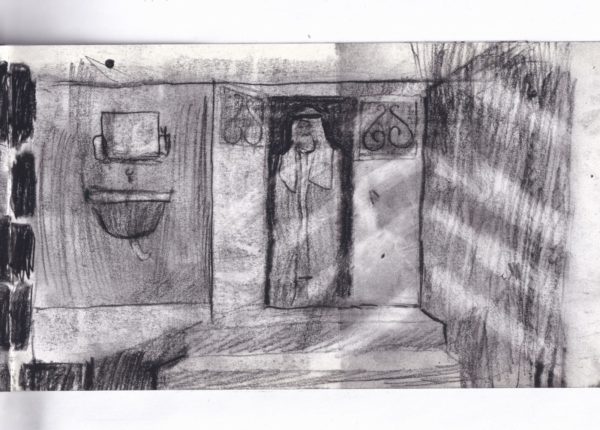
Fadi Al-Melhem is a Syrian visual artist and designer based in Lebanon, specializing in printmaking and traditional printing techniques. A graduate in Graphic Arts from the University of Damascus, his practice combines drawing, printmaking, and artist books to explore the relationships between memory, identity, and public space. He is also the co-founder of Studio Kunukku, a collective dedicated to preserving traditional printmaking techniques, with a particular focus on woodcut printing.
During the residency, he is developing Sawt al-Khayāl fī Tanāqul al-Aqwāl (The Echo of Imagination in Oral Transmission), a project inspired by a family story about his grandfather and the belief in reincarnation. Passed down orally through several generations, the story has continuously changed with each new narrator, accumulating memories, interpretations, and omissions along the way.
Through this process, Fadi explores how oral storytelling shapes collective memory and how narratives evolve between reality and imagination. During the residency, he will create a series of eighteen hand-printed and hand-carved artist books. Each book will be reinterpreted by a new reader and reconstructed through their own retelling, creating an ongoing chain of transformation in which storytelling becomes a shared, collective process. The project reflects on the Mediterranean as a space where stories, beliefs, and identities are constantly reshaped through their transmission.
 Hana Gamal / Egipte @hanaperlas
A TREMBLE
Hana Gamal is an Egyptian photographer and visual artist based in Cairo. She studied Communication, Media Arts, and Psychology at the American University in Cairo before completing an advanced photojournalism program at the Danish School of Media and Journalism. Her practice brings together documentary photography, anthropology, and psychology, and has been supported by grants and residencies including the AFAC Arab Documentary Photography Grant and the Cité Internationale des Arts in Paris.
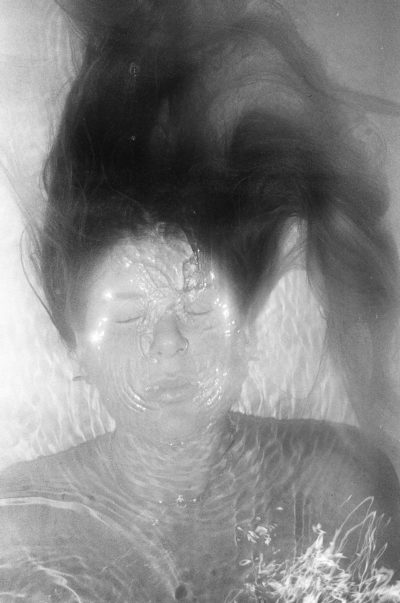
During the residency, she is developing A Tremble, a photographic project exploring suspended forms of grief experienced by a generation shaped by political violence, interrupted revolutions, war, displacement, and the rapid transformation of cities.
Using Cairo as its point of departure, the project considers how the city has become, since 2011, a landscape of loss, departure, and fragmented memory. Combining analogue photography, text, sound, and images altered through the Polaroid soup process—in which photographic emulsions dissolve, distort, and partially disappear—the work turns the photograph into a fragile surface marked by time, trauma, and memory. Rather than documenting what happened, A Tremble asks what it feels like to keep living in the aftermath, when grief has not yet found a space in which to unfold.
 Ieva Saudargaitė Douaihi / Líban / Lituània @ieva.saudargaite.douaihi
MARE NEXUS
Ieva Saudargaitė Douaihi is a Lebanese-Lithuanian transdisciplinary artist based in Beirut. Working across photography, material research, and installation, her practice explores images as expanded forms that circulate through archives, found materials, natural elements, and digital environments. Through processes of translation, transformation, and recontextualization, she investigates how images shape personal and collective narratives, carry memory and emotion, and propose alternative ways of mapping territory beyond fixed geographies and official histories.
During the residency, she is developing Mare Nexus, a project that approaches the Mediterranean as a space of connection, circulation, and fragmentation through the invisible network of submarine cables that carry images, data, and information across its shores. Tracing the 96 points where these cables emerge onto land, the artist gathers photographs of the sea shared by people who live in or pass through these locations, creating a collective archive of dispersed perspectives on a shared geography.
These images are translated into cyanotypes, moving them from the digital flow into a tangible medium while preserving the traces, compressions, and imperfections of their online circulation. Arranged along the Mediterranean coastline and connected by a hand-stitched blue thread running across their horizons, the cyanotypes form a material cartography and a counter-archive that replaces political borders with shared visual experiences and emotional connections. During the residency, the project will incorporate the memories and feelings associated with each photograph, expanding this network of relationships while exploring new ways of sharing the archive through installation, publication, and sound.
 Hiba Dahibi / Marroc @hiba_dahibi
HOME AWAY FROM HOME
Hiba Dahibi is a Moroccan photographer and filmmaker based in Salé. With a background in film studies, her practice moves between photography and essay filmmaking, combining images, text, and archival material to explore memory, space, and belonging. Through fragments, absences, and landscapes, she creates intimate narratives that transform photography into a space for fiction and experimentation, where personal and collective experiences intersect.
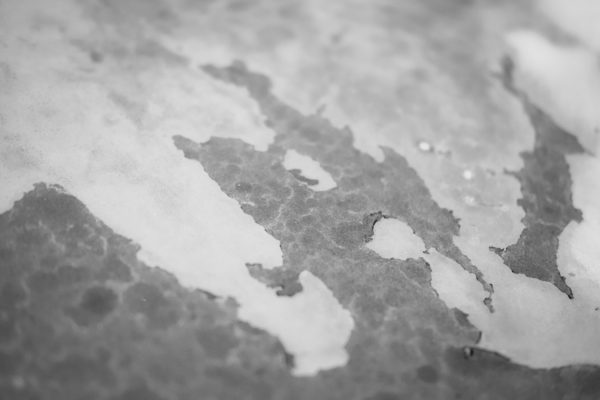
During the residency, she is developing Home Away From Home, an autofictional project about grief, memory, and the possibility of rebuilding the idea of home through the places we inhabit temporarily. The project began after the sudden death of her father while she was attending an artistic residency in Marseille, turning the residency itself into a place of refuge where loss could be processed.
Through photographs, texts, re-photographed family archives, and physical interventions on photographic prints—including chemically eroding images with water and bleach—Hiba explores the fragility of memory and its material transformations. Here, the Mediterranean appears less as a geographical territory than as an emotional landscape connecting Morocco and Marseille: a space of movement, return, and emotional displacement where personal experience resonates with shared stories of loss, exile, and rebuilding. The project unfolds across photography, text, archives, and installation, creating an intimate counter-archive in which memory remains deliberately fragmented, unstable, and open.
 Mohammad Husseini / Palestina
AMINA
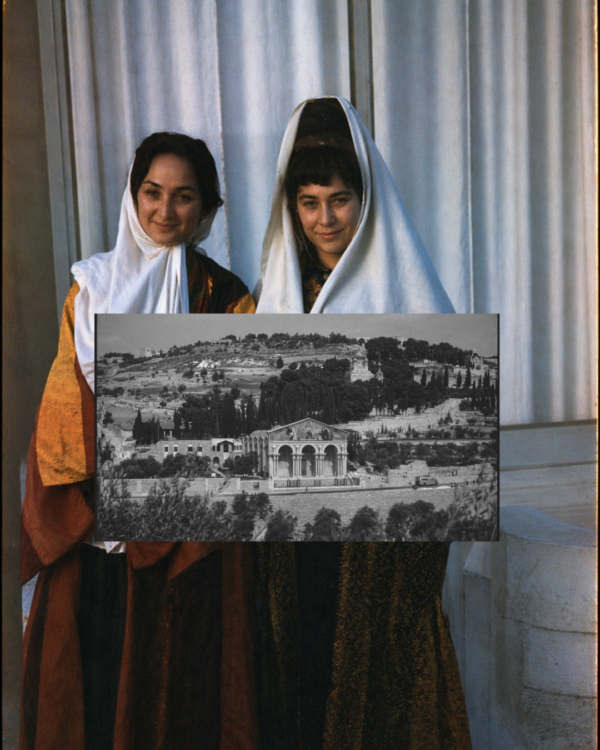
Mohammad Husseini is a Palestinian filmmaker and visual storyteller based in Barcelona. His practice explores memory, identity, and political history through archival cinema and documentary storytelling, uncovering the narratives that exist between the intimate and the collective.
During his residency at Konvent, Husseini is developing AMINA, a feature film and audiovisual installation built around the filmed archive of his great-grandmother, Amina Husseini, one of the first Palestinian women to document Jerusalem with an amateur camera before 1967. Drawing on 8 mm films, photographs, letters, and family documents, the project investigates how personal archives can challenge erasure and reconstruct fragmented memories.
At Konvent, Husseini expands this material into a spatial experience in which the archive ceases to function as a historical document and instead becomes a living territory of resistance, absence, and collective memory.
 Sid Ali Kherfallah / Algèria @sidvli
FRAGMENTS DE VIE
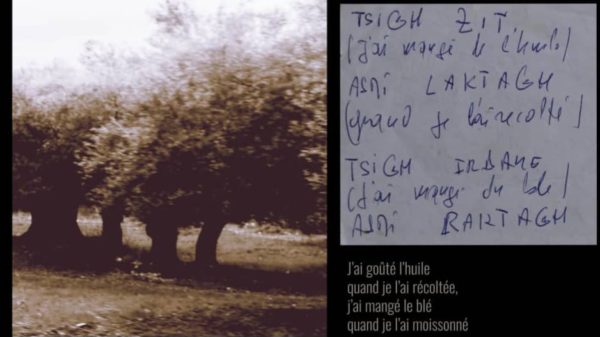
Sid Ali Kherfallah is a self-taught Algerian photographer whose practice explores memory, transmission, and the material traces of time. Raised in a Kabyle Amazigh-speaking family, his work is deeply rooted in oral tradition and in the desire to preserve stories, gestures, and fragments of everyday life. Through a minimalist photographic language and close attention to the materiality of objects and places, he investigates the relationships between intimate memory, absence, and the Mediterranean landscape.
During the residency, he is developing Fragments de vie, a project inspired by a family archive of poems and stories that his grandmother recited orally and his father carefully transcribed to prevent them from disappearing. Following the loss of both of them, these handwritten pages became the starting point for an investigation into the ways memory is passed from one generation to the next. If his father transformed spoken words into writing, Sid Ali seeks to translate writing, silence, and absence into photography.
Through handwritten fragments, abandoned interiors, peripheral landscapes, and surfaces marked by time, he creates an intimate archive that connects his family’s history with the oral traditions shared across the Mediterranean. During the residency, he will expand the project through material experiments with water and salt, sound recordings of voices and silences, and the translation of Kabyle texts, deepening his exploration of the relationships between language, territory, and memory.
From July 6 to 19, 2026, Konvent’s self-managed cultural space will host the second edition of the Expanded Mediterranean artist residency. This year, eleven artists from Palestine, Egypt, Tunisia, Algeria, Morocco, Lebanon, and Syria will come together for two weeks of research, creation, and exchange.
Throughout the residency, each artist will develop their ongoing project, which will be presented to the public during an open studio day on Saturday, July 18. The program combines time for individual research with moments of collective experimentation, dialogue, and shared reflection.
The residency will also feature a series of encounters with cultural professionals, including independent curators Ada Sbriccoli and Arola Valls, the team from Jiser Reflexions Mediterrànies, Jessica Murray, Head of Training and Professional Development in Documentary Photography at the Arab Documentary Photography Program – Magnum Foundation, and Anna Surinyach, photo editor at 5W magazine and photojournalist.
Throughout the residency, project coordinators Séverine Sajous, Yamina Tarbai, and Anna Bosch Miralpeix will accompany the artists’ creative processes while supporting their adaptation to the local context and the experience of living and working together in the unique communal environment of Konvent.
What is Expanded Mediterranean?
Expanded Mediterranean is a space for research, creation, exchange, and collective thinking. It brings together photography—understood as an open, fluid language, a place for creating and exploring new imaginaries—with a shared geopolitical landscape: the Mediterranean.
The residency is conceived as a space where artistic creation and critical reflection can generate narratives that challenge official maps, imposed borders, and colonial legacies. For this reason, it is exclusively open to artists from North Africa and West Asia.
The project takes inspiration from a map created by cartographer and contemporary artist Sabine Réthoré: a Mediterranean without borders. Rather than describing the world as it is, this map invites us to lose our bearings, unsettle established points of reference, and imagine other possible futures.
From this perspective, Expanded Mediterranean approaches the Mediterranean not as a fixed identity or a line dividing North and South, but as a shared space shaped by memories, conflicts, movement, care, and resistance.
About Konvent
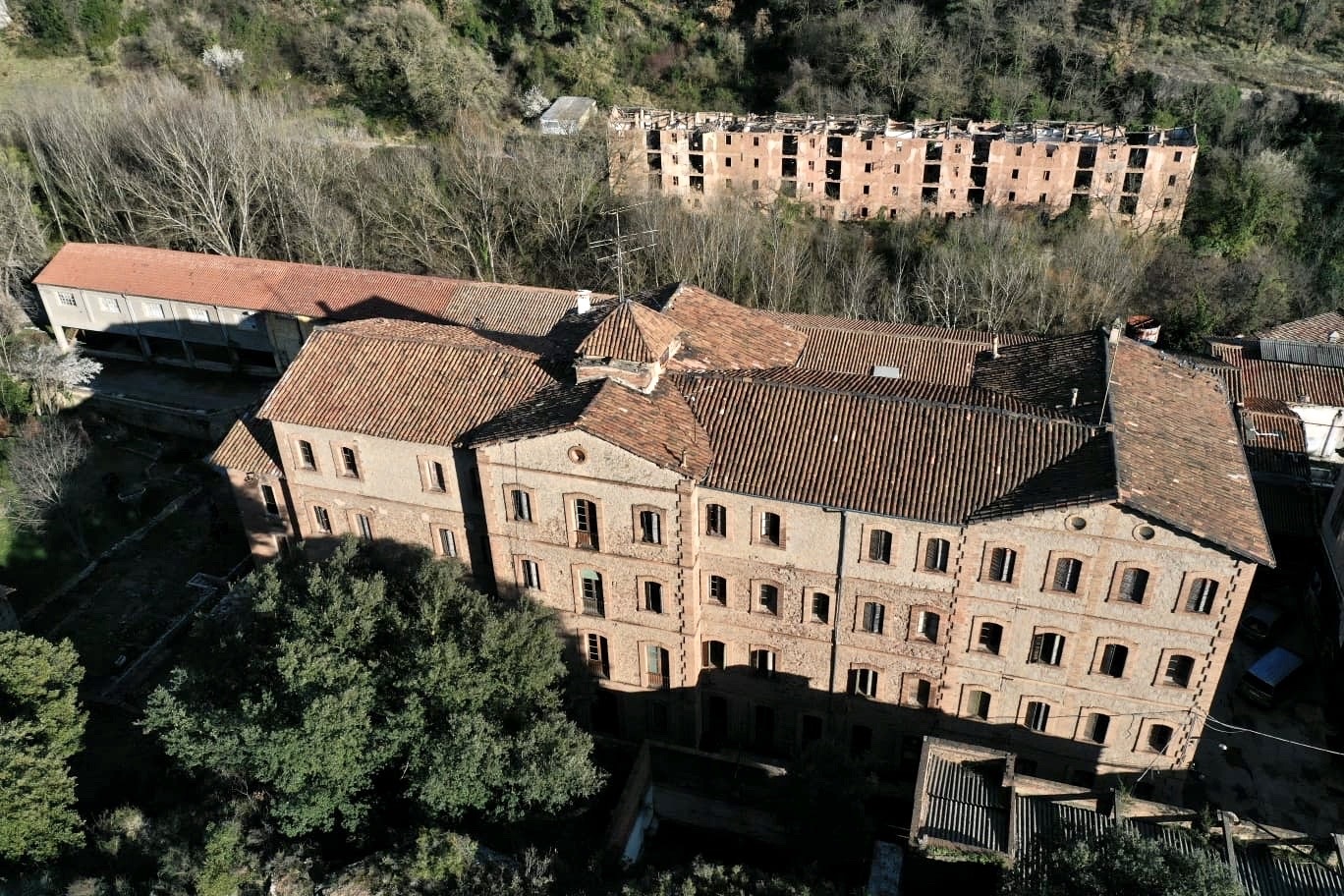
Expanded Mediterranean was born at Konvent, a former convent and nineteenth-century textile colony in Cal Rosal (Berga), which has been transformed over the past decade into a self-managed, multidisciplinary arts center.
Konvent is not a conventional cultural institution. It is a living space where every project finds its own place alongside artists’ studios, shared living areas, a communal kitchen, and spaces designed to encourage exchange, collaboration, and creative development.
Here, artistic practice is deeply intertwined with everyday life. The former convent and textile factory become a working environment that welcomes open-ended processes, works in progress, and spaces for research, experimentation, and dialogue.
Rooted in its local territory while connected to international artistic networks and practices, Konvent operates as a creative laboratory that supports independent, collaborative ways of making and sharing culture.